Walking into a new gym can feel uncomfortable when you do not know what will happen next.
Will everyone already know the exercises? Will you be expected to lift heavy? Will a coach watch your form, or will you be left to figure things out?
If you are searching for what is semi-private training like, the short answer is this: it is structured strength training in a small group, with individualized coaching throughout the session.
This is not a random workout where everyone races through the same exercises. It is also not a 12-week program overview. This article focuses on one typical semi-private training session at Hive Fitness Journey in Woodstock, GA, so you can see exactly what to expect before you walk through the door.
What is semi-private training like? The 60-minute flow
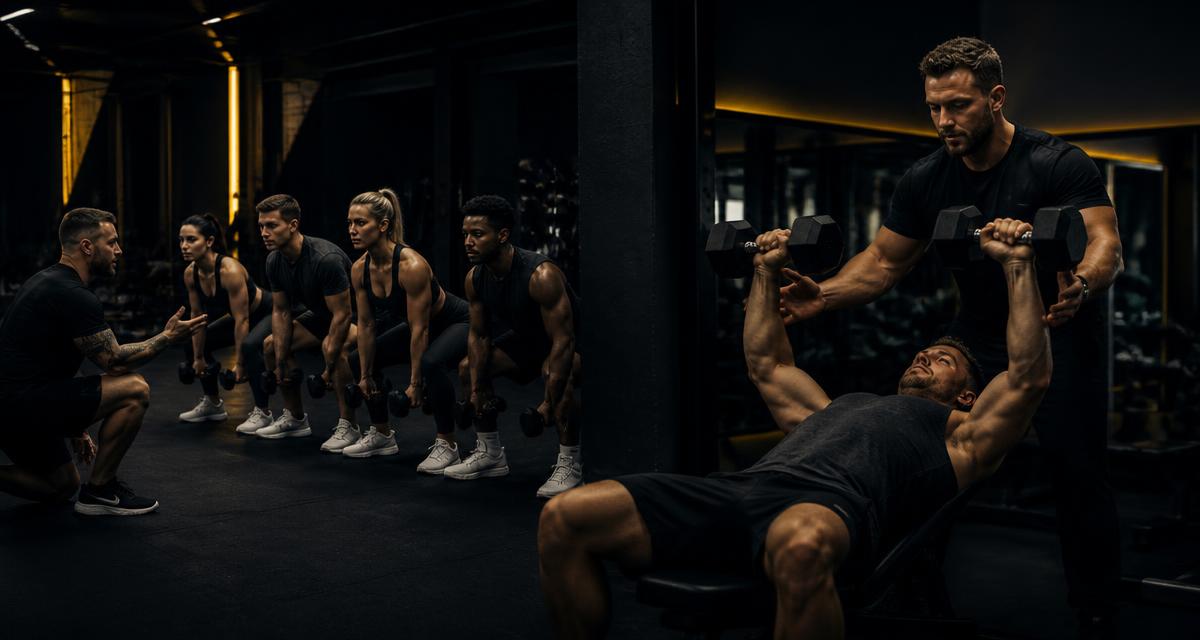
At Hive, semi-private training is designed to give you the structure of personal training while allowing you to train alongside a small group. Sessions are capped at four clients per coach, which allows the coach to move through the room, give form feedback, adjust exercises, and keep track of your progress.
The session may vary based on your program, experience, goals, and how you feel that day. However, the general structure remains consistent:
- Arrival and check-in
- Coach-led warm-up
- Movement preparation
- Main strength work
- Finisher
- Cool-down and stretching
- Post-session check-in
Here is what that looks like minute by minute.
Minutes 0–5: Arrival and check-in
You do not need to arrive with a perfect plan. You do not need to know where every piece of equipment is. Your first job is simply to arrive, say hello, and let the coach know how you are doing.
The coach may ask questions such as:
- How is your energy today?
- How did you sleep?
- Do you have any areas that feel stiff or uncomfortable?
- Is there anything that may affect today's training?
This quick conversation matters because your workout should match your current starting point, not an ideal version of you.
If you are new, the coach will also help you understand where to put your belongings, where your training station is, and what the session will involve. You will not be expected to walk in and immediately start lifting without direction.
At Hive Fitness Journey, the goal is to make the room feel approachable. You are training with other busy adults 30-55+, but the workout is still coached around your needs.
Minutes 5–12: Coach-led warm-up
The warm-up raises your body temperature and helps you transition from the rest of your day into training.
You may use light movements such as:
- Easy rowing or walking
- Bodyweight squats
- Marching patterns
- Light carries
- Shoulder movements
- Controlled step-ups
The purpose is not to exhaust you before the strength work begins. It is to prepare you to move with more control and awareness.
A coach-led warm-up also gives the coach an early look at how you are moving that day. If a movement looks limited or uncomfortable, the coach can make an adjustment before you reach the main exercises.
This is one reason a coached session is different from following a generic video. The plan is not fixed if your body or schedule has changed.

Minutes 12–20: Movement preparation
After the general warm-up, the session moves into movement preparation. This section connects the warm-up to the strength work.
You may practice patterns such as:
- Hinging at the hips
- Squatting to a box or bench
- Bracing your core
- Pressing overhead with a light weight
- Pulling a resistance band
- Balancing through a step-up
- Moving through a controlled range of motion
The coach demonstrates the movement, explains the key points, and watches as you practice.
This is where you may hear simple cues such as:
- Keep your feet steady.
- Move slowly.
- Keep your ribs stacked over your hips.
- Push the floor away.
- Control the lowering phase.
- Breathe and stay relaxed.
You do not need to remember every cue at once. Good coaching gives you one or two useful points to focus on so the exercise becomes clearer.
For adults looking for functional fitness over 40, this preparation is important. Strength is not only about how much weight you can lift. It is also about learning to control your body through common patterns that support daily life. If you want a broader look at Hive's approach to strength training in Woodstock, GA, this same coach-led structure carries over into the full program.
Minutes 20–45: Main strength work
This is the central portion of the session.
Your coach will guide you through one or more primary strength movements. Depending on the day, that might include a squat, hinge, push, pull, carry, or combination of movements using dumbbells, kettlebells, bands, benches, or other equipment.
The key difference in semi-private training is that everyone may be working on a related training goal without doing the exact same version of the exercise.
If you want a closer look at how this format works, Hive offers semi-private training with a coach-to-client ratio designed to give you more guidance, exercise adjustments, and accountability than a crowded class.
One client may perform a goblet squat. Another may use a box squat. Someone else may work with a lighter range of motion or a different setup. The coach chooses the version that fits each person's current ability.
During this section, the coach will:
- Demonstrate the exercise
- Help you choose an appropriate starting weight
- Watch your technique
- Offer corrections when needed
- Adjust the exercise if it is not a good fit
- Track your sets, repetitions, or load
- Help you progress without rushing
The coaching is active, but it is not constant pressure. You will have time to complete your set, recover, and prepare for the next round.
That balance is what many busy adults 30-55+ want when comparing a large strength training class with semi-private personal training. You get the energy of training with other people, without feeling like you are competing with the room.
This is also where form correction becomes especially valuable. A coach may notice that you are shifting your weight, rushing a repetition, losing control, or choosing a load that is not appropriate for the day. The correction is practical and specific, not embarrassing.
Muscle protects metabolism, joints, and independence. Consistency beats intensity. A well-coached session helps you build the strength and confidence to keep training regularly.

Minutes 45–52: Finisher
The finisher is a short closing segment that may focus on conditioning, muscular endurance, carries, sled work, core control, or a simple circuit.
It is not automatically the hardest part of the workout. The purpose is to finish with intention while respecting the quality of the session that came before it.
Examples may include:
- A controlled sled push
- A short carry
- Kettlebell movements
- Step-ups
- A simple bodyweight circuit
- Core stability work
- Low-impact conditioning
The coach can change the duration, load, range of motion, or exercise selection based on your fitness level.
If you are newer to training, the finisher may be shorter or more technique-focused. If you have more experience, the coach may give you a progression. Everyone can train in the same room while working at an appropriate level.
You should leave feeling that you trained with purpose. You should not feel as though the session was designed to punish you.
Minutes 52–57: Cool-down and stretching
The cool-down gives you time to transition out of the main work.
You may use light stretching, breathing, gentle mobility, or easy movement. The coach may guide you through positions that help you relax and notice how you feel after training.
The cool-down is not a test of flexibility. You are not expected to force a stretch or compare your range of motion with anyone else.
If you want more detail on Hive's group setting, group training classes in Woodstock, GA can help you understand how coaching, structure, and exercise modifications work in practice. You can also read Personal Training for Beginners if you want a related breakdown of how coach-led training helps you start with more confidence.
If a movement creates pain, stop and tell the coach. Hive coaches can modify general exercises, but they do not diagnose injuries or provide medical treatment. If you have an injury, medical condition, recent surgery, persistent pain, or another health concern, speak with a qualified healthcare provider before beginning or changing an exercise program.

Minutes 57–60: Post-session check-in
The last few minutes are used to review the session.
Your coach may ask:
- How did that feel?
- Which movement felt most comfortable?
- Did anything need to be modified?
- How is your energy now?
- Do you have any questions about the workout?
This is also when the coach may note what you completed and what should be considered for the next session.
That follow-up creates continuity. You are not walking into a brand-new random workout every time. Your training can build from one session to the next.
For busy adults 30-55+ in Woodstock, Kennesaw, and nearby Cherokee County communities, this structure can make a major difference. You do not have to spend your limited free time deciding what to do, searching for exercises, or wondering whether your plan is working.
What should you bring to your first session?
Keep it simple:
- Comfortable workout clothes
- Supportive athletic shoes
- A water bottle
- Any information your coach needs about your goals or health history
- A willingness to ask questions
You do not need expensive equipment, prior lifting experience, or a perfect fitness background.
If you are looking for personal training for ages 40 and beyond, the right setting should meet you where you are. A 40+ fitness program should provide clear instruction, manageable progressions, and enough accountability to help you stay consistent.
What progress can you expect from this format?
A single session is not meant to tell the whole story. The value comes from repeating a well-designed process over time.
Many adults choose this format because they want progress that reaches beyond appearance, including:
- Better consistency
- Improved strength
- More confidence using equipment
- Better movement control
- A clearer training routine
- Support from a coach and small community
Results depend on your consistency, nutrition, recovery, starting point, and individual circumstances. The goal is to build a plan you can actually live with.
FAQ: Semi-private personal training — what to expect
Is semi-private training suitable for beginners?
Yes. Beginners can start with scaled exercises, lighter weights, and clear instruction. You are not expected to know how to perform every movement before arriving. The coach demonstrates the exercise and helps you find the appropriate starting point.
How is semi-private training different from a regular strength training class?
A typical class may have one workout for the entire room. Semi-private training uses a small coach-to-client ratio and allows exercises, weights, and progressions to be adjusted for each person. You train alongside others, but your plan is not one-size-fits-all.
How much does semi-private training cost at Hive?
Hive offers memberships at $198, $220, and $260 per month depending on the level of coaching and support you need. Semi-private coaching is designed to give you more individual attention than a large class while staying more accessible than 1:1 training. If you want help choosing the right fit, start with a free session and talk through your goals with a coach.
Ready to experience the session for yourself?
If you want to see what coaching feels like before making a decision, you can book a free first session below — or, if you want to talk through your goals first, Book a Free Strategy Call.
You do not need to arrive experienced. You need a supportive place to start, a clear plan, and coaching that helps you keep showing up.